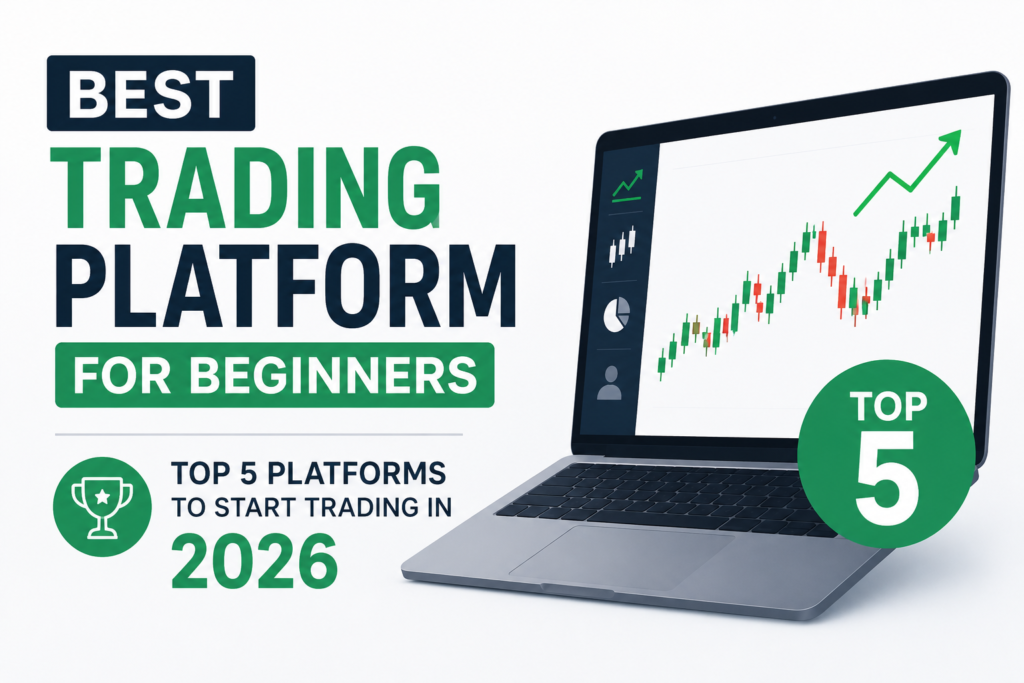

The best trading platforms for beginners in 2026 are Fidelity, Charles Schwab, Robinhood, Webull, and eToro. These platforms offer beginner-friendly interfaces, educational resources, zero-fee brokerage options, and powerful trading tools. Fidelity is ideal for long-term investors, while Robinhood and Webull appeal to active traders seeking simplicity and flexibility.
Introduction
Starting your trading journey can feel overwhelming. New traders face a wide range of choices, from stocks and ETFs to cryptocurrencies and forex markets. However, one of the most important decisions you’ll make is selecting the right trading platform.
A beginner-friendly platform can simplify the learning process, reduce costly mistakes, and provide the tools needed to make informed decisions. On the other hand, a complex or expensive platform may create unnecessary obstacles for new investors.
Today, many brokers compete to attract beginner traders by offering commission-free trading, educational resources, demo accounts, and advanced mobile applications. As a result, choosing among them can be challenging.
In this guide, we’ll review the best trading platform for beginners, compare the top options available, discuss key features to look for, and help you determine which platform best matches your trading goals.
What Is a Trading Platform?
Definition
A trading platform is a software application that allows investors and traders to buy, sell, and manage financial assets such as stocks, ETFs, options, forex, commodities, and cryptocurrencies.
Modern trading platforms provide:
- Market data
- Charting tools
- Trade execution
- Portfolio management
- Research resources
- Educational content
For beginners, the platform serves as the primary gateway to financial markets.
Why Choosing the Right Trading Platform Matters
Many new traders focus entirely on selecting stocks while overlooking the importance of the platform itself.
A quality trading platform for beginners offers several advantages:
Easier Learning Curve
Simple interfaces help users understand trading concepts faster.
Lower Costs
Reduced fees allow beginners to preserve more capital.
Educational Support
Learning resources improve decision-making.
Better Risk Management
Advanced tools help traders monitor positions and manage exposure.
Improved User Experience
An intuitive design makes investing less intimidating.
Key Features to Look for in a Trading Platform for Beginners
Before selecting a platform, evaluate the following factors.
Low or Zero Fee Brokerage
Many brokers now offer commission-free trading.
Benefits include:
- Lower costs
- Better capital efficiency
- Increased flexibility
User-Friendly Interface
The platform should be easy to navigate even for first-time traders.
Educational Resources
Look for:
- Video tutorials
- Articles
- Webinars
- Market guides
Mobile Trading App
A reliable mobile experience is essential in today’s fast-moving markets.
Security and Regulation
Choose platforms regulated by recognized financial authorities.
Customer Support
Accessible support can be invaluable when issues arise.
Top 5 Best Trading Platforms for Beginners
1. Robinhood
Robinhood helped popularize commission-free investing and remains a favorite among new traders.
Key Features
- Commission-free stock trading
- User-friendly mobile app
- Fractional shares
- Instant account setup
- Cryptocurrency access
Best For
Beginners seeking a simple and intuitive investing experience.
Pros
- Easy to use
- Zero commission stock trading
- Fast onboarding process
Cons
- Limited advanced research tools
- Fewer educational resources than some competitors
2. Fidelity Investments
Fidelity is widely recognized for combining beginner-friendly tools with professional-grade resources.
Key Features
- Commission-free stock and ETF trading
- Extensive educational content
- Research reports
- Retirement planning tools
- Strong customer support
Best For
Investors focused on long-term wealth building.
Pros
- Excellent educational materials
- Trusted reputation
- Comprehensive investment options
Cons
- Interface may initially feel overwhelming
3. Charles Schwab
Charles Schwab consistently ranks among the best brokers for beginner investors.
Key Features
- Zero fee brokerage on many U.S. stocks and ETFs
- Educational resources
- Robust trading tools
- High-quality research
- Strong customer service
Best For
Beginners who want room to grow into more advanced trading.
Pros
- Trusted brand
- Excellent learning resources
- Competitive pricing
Cons
- Some advanced features may require additional learning
4. Webull
Webull appeals to active traders seeking more sophisticated charting tools.
Key Features
- Commission-free trading
- Advanced charting
- Paper trading accounts
- Real-time market data
- Mobile-first experience
Best For
Beginners interested in active trading and technical analysis.
Pros
- Powerful charting
- Free paper trading
- Modern interface
Cons
- Educational content not as extensive as Fidelity
5. eToro
eToro has gained popularity through its social trading capabilities.
Key Features
- Social investing
- Copy trading
- Beginner-friendly interface
- Diverse asset selection
- Educational resources
Best For
New investors who want to learn from experienced traders.
Pros
- Unique social features
- Easy navigation
- Strong community engagement
Cons
- Fees may vary by asset type and region
Comparison of the Top 5 Trading Platforms
| Platform | Beginner Friendly | Zero Fee Brokerage | Educational Resources | Mobile App | Best For |
|---|---|---|---|---|---|
| Robinhood | Excellent | Yes | Moderate | Excellent | New investors |
| Fidelity | Excellent | Yes | Excellent | Excellent | Long-term investors |
| Charles Schwab | Excellent | Yes | Excellent | Excellent | Growing traders |
| Webull | Very Good | Yes | Good | Excellent | Active traders |
| eToro | Excellent | Varies | Good | Excellent | Social trading |
Step-by-Step Guide to Choosing a Trading Platform
Step 1: Define Your Goals
Determine whether you’re interested in:
- Long-term investing
- Day trading
- Swing trading
- Cryptocurrency trading
Step 2: Compare Fees
Evaluate:
- Commissions
- Withdrawal fees
- Currency conversion costs
- Margin rates
Step 3: Test the Platform
Many brokers offer demo or paper trading accounts.
Step 4: Evaluate Educational Resources
A platform with strong educational content can accelerate your learning.
Step 5: Consider Future Needs
Choose a broker that can grow with your experience level.
Zero Fee Brokerage: Is It Really Free?
One of the biggest trends in recent years has been the rise of zero fee brokerage.
What It Means
Commission-free trading generally means:
- No stock trading commissions
- No ETF trading commissions
Potential Hidden Costs
However, traders should still watch for:
- Spread markups
- Currency conversion fees
- Margin interest
- Premium services
Therefore, it’s important to review the complete fee structure rather than focusing solely on commission rates.
Common Mistakes Beginners Make When Choosing a Platform
Choosing Based Only on Fees
Low fees are important, but platform quality matters too.
Ignoring Educational Tools
Strong learning resources can improve long-term performance.
Overlooking Customer Support
Responsive support can save time and frustration.
Selecting Overly Complex Platforms
Beginners often benefit from simplicity.
Not Considering Long-Term Growth
Your platform should support both beginner and advanced investing needs.
Internal Linking Opportunities
Consider linking this article to:
- How to Start Trading Stocks for Beginners
- Beginner’s Guide to Investing
- Best Trading Strategies for New Investors
- Understanding Brokerage Fees
- Risk Management for Beginner Traders
External Authoritative References
For additional research, consider referencing:
FAQ
What is the best trading platform for beginners?
The best trading platform for beginners depends on individual goals, but Fidelity, Robinhood, Charles Schwab, Webull, and eToro are among the most beginner-friendly options.
Are zero fee brokerage platforms really free?
Most commission-free brokers eliminate stock trading commissions, but other fees may still apply.
Which trading platform is easiest to use?
Robinhood and eToro are widely regarded as among the easiest platforms for beginners.
Is paper trading important for beginners?
Yes. Paper trading allows beginners to practice without risking real money.
Which platform offers the best educational resources?
Fidelity and Charles Schwab are often recognized for comprehensive educational content.
Can beginners trade using mobile apps?
Yes. Most modern brokers offer powerful mobile trading applications designed for beginner and experienced investors alike.
Should beginners choose active trading or long-term investing?
Many beginners benefit from starting with long-term investing before exploring more active trading strategies.
Conclusion
Finding the best trading platform for beginners is one of the most important steps in building a successful investing journey. The right platform should offer a balance of simplicity, education, security, and affordability while helping you develop confidence as a trader.
Among today’s leading options, Robinhood, Fidelity, Charles Schwab, Webull, and eToro each provide unique advantages. Whether you’re looking for zero fee brokerage, advanced charting tools, educational content, or social investing features, there is a platform that fits your needs.
Before opening an account, compare features carefully, test available tools, and align your choice with your long-term financial goals. A strong platform can help you learn faster, avoid common mistakes, and create a solid foundation for future investing success.