
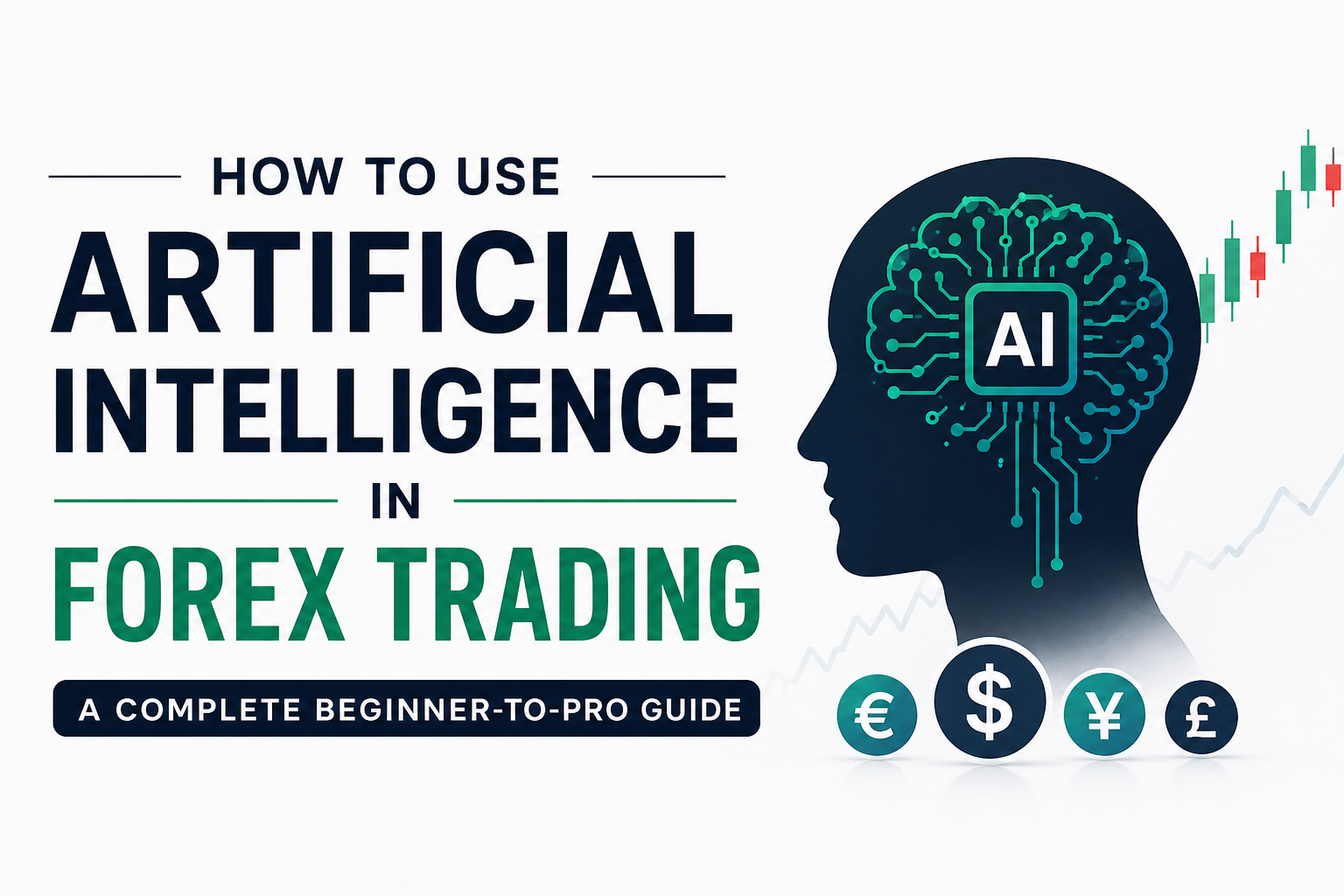
To learn how to use artificial intelligence in forex trading, start by using AI-powered market analysis tools, selecting an AI trading platform, backtesting strategies, automating trade execution, applying risk management rules, monitoring AI-generated signals, optimizing performance with data insights, and continuously refining your trading approach based on changing market conditions.
Introduction
Artificial Intelligence (AI) is transforming the way traders analyze markets, identify opportunities, and execute trades. What once required hours of chart analysis and manual decision-making can now be accomplished in seconds using sophisticated AI-powered tools.
In the forex market, where trillions of dollars are traded daily and prices move rapidly across global sessions, speed and data analysis are critical. This is why artificial intelligence forex trading has become one of the fastest-growing trends among retail traders, hedge funds, and institutional investors.
Today, AI can analyze market trends, recognize patterns, generate trade signals, automate execution, and even adapt strategies based on changing market conditions. As a result, many traders want to know whether forex AI can improve profitability and how to use these tools effectively.
This guide explains how AI works in forex trading, the best ways to implement it, whether AI forex trading is profitable, and how beginners can start learning trading with AI.
What Is Artificial Intelligence Forex Trading?
Definition
Artificial intelligence forex trading refers to the use of machine learning algorithms, predictive analytics, and automated systems to analyze forex markets, generate trading signals, and execute trades with minimal human intervention.
Unlike traditional trading systems that rely on fixed rules, AI-powered systems can:
- Analyze large datasets
- Identify hidden patterns
- Adapt to changing market conditions
- Improve decision-making over time
- Execute trades automatically
This makes AI one of the most powerful technologies in modern trading.
Why AI Is Becoming Popular in Forex Markets
Several factors have contributed to the rise of artificial intelligence forex systems.
Massive Data Processing
AI can analyze:
- Currency prices
- Economic indicators
- Interest rate announcements
- News events
- Market sentiment
far faster than human traders.
Faster Decision-Making
Markets move quickly.
AI systems can generate signals and place trades within milliseconds.
Reduced Emotional Bias
Fear and greed often cause poor trading decisions.
AI follows data-driven rules.
Continuous Market Monitoring
Forex operates 24 hours a day.
AI can monitor the market continuously without fatigue.
How to Use Artificial Intelligence in Forex Trading
Step 1: Select an AI Trading Platform
The first step is choosing a platform that integrates AI capabilities.
Look for:
- Automated signal generation
- Strategy optimization
- Risk management tools
- Backtesting functionality
Step 2: Gather Quality Market Data
AI systems require reliable data.
Examples include:
- Historical price data
- Economic releases
- Technical indicators
- Market sentiment data
High-quality data leads to more accurate predictions.
Step 3: Use AI for Market Analysis
AI can identify:
- Trend reversals
- Momentum shifts
- Correlation changes
- Volatility spikes
Many traders use AI to filter opportunities before making final decisions.
Step 4: Backtest Trading Strategies
Before risking capital, test strategies using historical data.
Benefits include:
- Performance validation
- Risk assessment
- Strategy refinement
Step 5: Automate Trade Execution
AI systems can automatically:
- Enter trades
- Manage positions
- Set stop losses
- Take profits
Automation reduces reaction time and emotional interference.
Step 6: Monitor Performance
Even advanced AI requires supervision.
Review:
- Win rate
- Drawdowns
- Risk exposure
- Market adaptability
Step 7: Continuously Optimize
Markets evolve.
AI systems should be updated and refined regularly to maintain effectiveness.
How AI Works in Forex Trading
AI uses several technologies to analyze markets.
Machine Learning
Machine learning models identify patterns in historical data and improve predictions over time.
Natural Language Processing (NLP)
NLP analyzes:
- Financial news
- Economic reports
- Social media sentiment
This helps assess market sentiment.
Predictive Analytics
AI evaluates historical behavior to forecast potential future movements.
Deep Learning
Advanced neural networks recognize complex market relationships that traditional models may miss.
Best Applications of Forex AI
Trend Identification
AI can detect emerging trends earlier than many manual methods.
Signal Generation
Systems provide:
- Buy signals
- Sell signals
- Entry points
- Exit points
Portfolio Management
AI helps optimize position sizing and risk allocation.
Automated Trading
Many traders use forex digital AI systems to execute trades automatically.
Market Sentiment Analysis
AI analyzes news and sentiment to identify potential market-moving events.
Is AI Forex Trading Profitable?
One of the most common questions traders ask is:
Is AI Forex Trading Profitable?
The answer is: AI can improve efficiency and decision-making, but profitability is not guaranteed.
Profitability depends on:
- Strategy quality
- Data accuracy
- Risk management
- Market conditions
- System maintenance
AI can provide a competitive advantage, but it cannot eliminate market risk.
Successful traders use AI as a tool rather than relying on it blindly.
How AI Is Used for Stock Trading
Many concepts overlap between forex and equity markets.
How to Use AI for Stock Trading
AI helps stock traders by:
- Screening opportunities
- Identifying trends
- Predicting price movements
- Managing portfolios
- Automating execution
Therefore, traders interested in forex often benefit from understanding how to use AI for stock trading as well.
AI Stock Trading for Beginners
For beginners, AI can simplify market analysis by highlighting potential opportunities and reducing information overload.
However, foundational market knowledge remains essential.
Trading Advice AI for Scalping
Scalping requires rapid execution and quick decision-making.
How AI Supports Scalping
AI can:
- Monitor multiple currency pairs simultaneously
- Detect short-term momentum shifts
- Execute trades instantly
- Manage stop-loss levels
Benefits for Scalpers
- Faster execution
- Reduced emotional errors
- Improved consistency
- Better opportunity identification
However, traders should test AI scalping systems thoroughly before deploying real capital.
Learn Trading with AI: Best Practices
Start with Education
Understand:
- Forex fundamentals
- Technical analysis
- Risk management
before relying on automation.
Use Demo Accounts
Practice in simulated environments before trading live.
Focus on Risk Management
AI cannot prevent losses.
Implement:
- Stop losses
- Position limits
- Exposure controls
Avoid Overreliance
Use AI as a decision-support tool rather than a guaranteed profit machine.
Track Results
Maintain a trading journal and monitor system performance regularly.
Artificial Intelligence Forex Trading vs Traditional Trading
| Feature | AI Trading | Traditional Trading |
|---|---|---|
| Speed | Extremely Fast | Slower |
| Emotion | None | High |
| Market Monitoring | 24/7 | Limited |
| Data Analysis | Advanced | Manual |
| Scalability | High | Limited |
| Consistency | High | Variable |
While AI offers significant advantages, human oversight remains important.
Real-World Example
Imagine a trader using an AI-powered forex system.
The platform:
- Analyzes EUR/USD market data.
- Monitors economic news.
- Detects bullish momentum.
- Generates a buy signal.
- Executes the trade automatically.
- Applies predefined risk controls.
- Exits when profit targets are reached.
This demonstrates how AI can automate much of the trading process while maintaining disciplined execution.
Internal Linking Opportunities
Consider linking this article to:
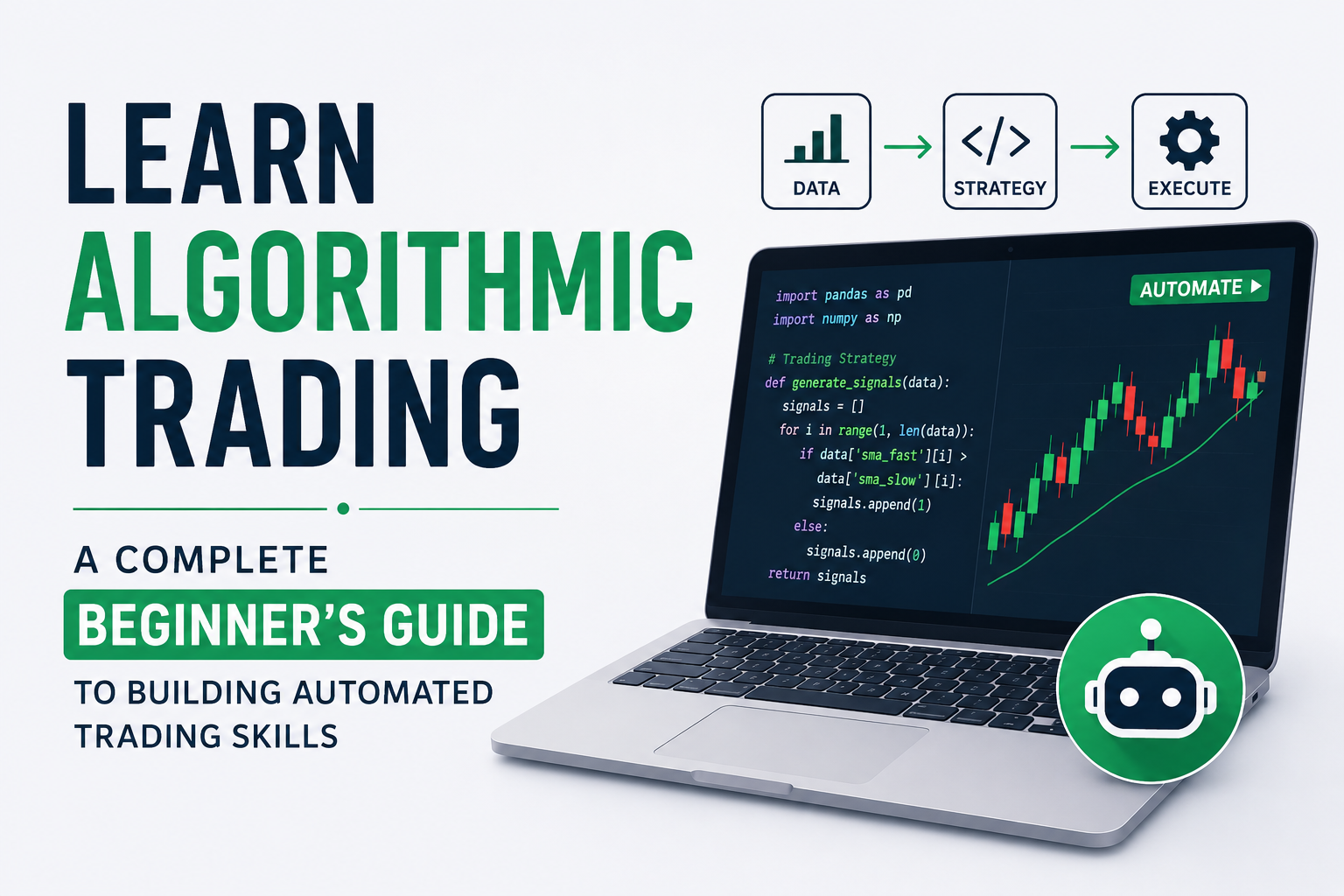
- Learn Algorithmic Trading
- How to Build a Trading Bot
- Best Trading Bot Strategies
- Forex Trading for Beginners
- Risk Management in Forex Trading
External Authoritative References
For additional research, consider:
FAQ
How to use artificial intelligence in forex trading?
Use AI for market analysis, signal generation, strategy testing, trade automation, risk management, and performance optimization.
What is artificial intelligence forex trading?
It is the application of AI technologies such as machine learning and predictive analytics to analyze and trade forex markets.
Is AI forex trading profitable?
AI can improve trading efficiency and decision-making, but profitability depends on strategy quality, risk management, and market conditions.
Can beginners use forex AI tools?
Yes. Many AI-powered platforms are beginner-friendly and provide automated analysis and trade recommendations.
How to use AI for trading?
AI can be used to identify trends, generate signals, automate execution, and optimize trading strategies.
How to use AI for stock trading?
AI assists stock traders through market screening, predictive analytics, portfolio management, and automated trade execution.
Is AI replacing human traders?
No. AI enhances decision-making and automation, but human oversight remains critical for strategy development and risk management.
Conclusion
Understanding how to use artificial intelligence in forex trading can provide traders with a significant advantage in today’s increasingly data-driven markets. AI technologies enable faster analysis, automated execution, improved risk management, and more informed decision-making, making them valuable tools for both beginners and experienced traders.
Whether you’re exploring artificial intelligence forex trading, evaluating whether AI forex trading is profitable, or learning how to trade with artificial intelligence, success ultimately depends on combining technology with sound trading principles. By using AI responsibly, continuously learning, and maintaining disciplined risk management, traders can position themselves to take advantage of the opportunities that modern financial technology offers.
If you’re ready to elevate your trading, start by learning trading with AI, testing AI-powered tools in a demo environment, and gradually integrating automation into your forex strategy.